
Resume Analyzer
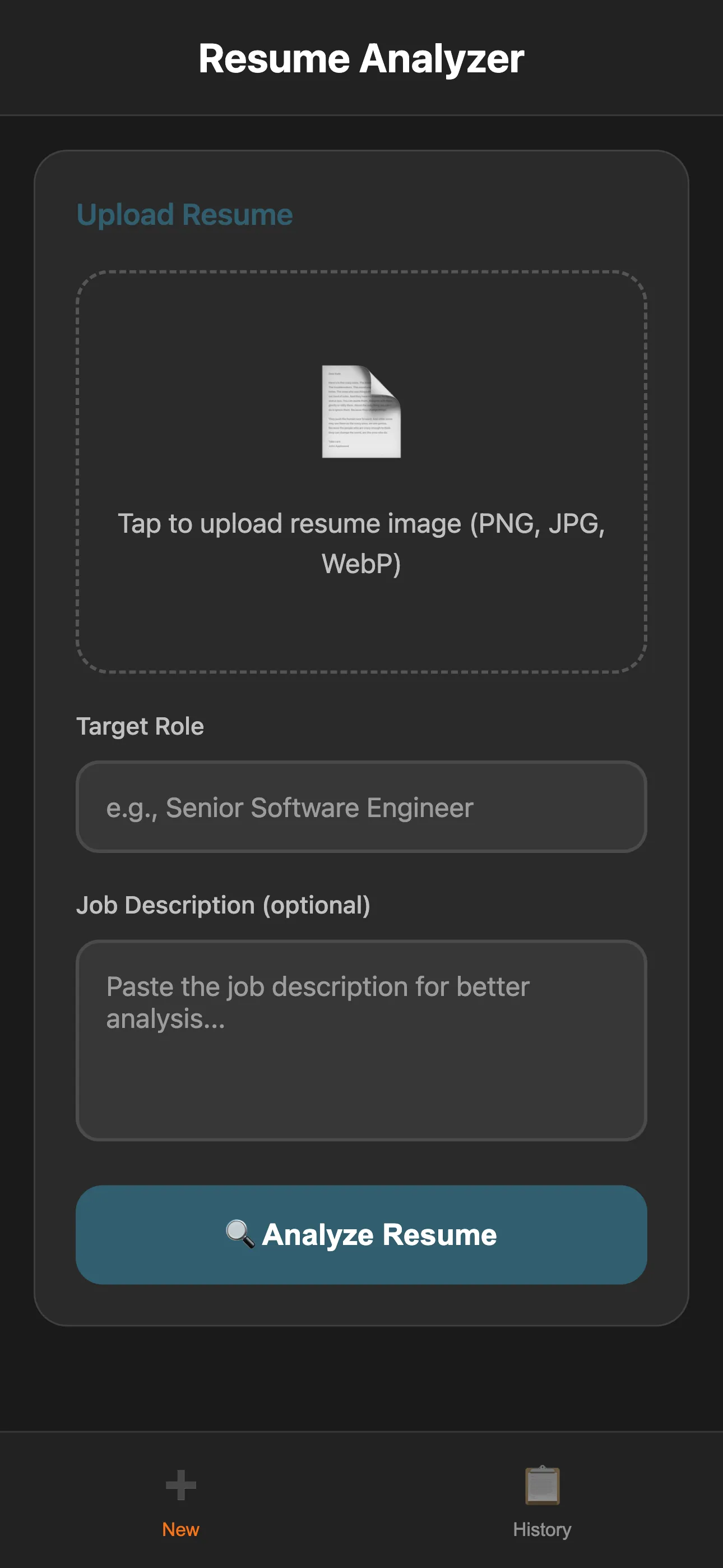
AI-powered resume analysis tool that evaluates ATS compatibility, provides job match scores, generates improved summaries, and prepares interview questions.
Transform your job application process with an AI-powered resume analyzer that goes beyond basic keyword matching. This full-stack application demonstrates building a complete mobile-ready app using Habits, from AI workflows to a polished frontend UI.
What It Does
- ATS Scoring: Evaluates your resume against Applicant Tracking System standards
- Job Match Analysis: Compares your skills and experience to target job requirements
- Improved Summary: AI-generates a better professional summary based on your experience
- Interview Prep: Generates likely interview questions based on your resume and target role
- Cover Letter Generation: Creates customized cover letters for specific job applications
- History Tracking: Stores all analyses locally for future reference
Why This Example
This showcase demonstrates:
- Multi-habit workflows, Multiple habits working together (analyze, generate cover letter, list, get)
- Vision AI integration, Uses OpenAI Vision to extract text from resume images
- Local database, SQLite for storing analyses without external dependencies
- Mobile-first UI, Responsive design ready for packaging as mobile/desktop app
- Complete app packaging, Can be exported as standalone binary, desktop app, or mobile app
Run Your .habit File
Run on Mobile
- [ ] Download the Cortex App from store or the downloads page
- [ ] Open the Cortex App on your device
- [ ] Tap "Open Habit" or "+" button
- [ ] Select your
.habitfile from your device storage - [ ] The habit will be loaded and ready to run
Run on Desktop
- [ ] Download the Cortex App for your platform from the downloads page
- [ ] Install and open the Cortex App
- [ ] Click "Open Habit" or drag & drop your
.habitfile - [ ] The habit will be loaded and ready to run
- [ ] Optional: Place a
.envfile in the same directory as your.habitfile to override environment variables
Run on Server
Run your .habit file as a server using the Cortex CLI:
# Install and run in one command
npx @ha-bits/cortex --config ./your-app.habit- [ ] Make sure Node.js 20+ is installed
- [ ] Run the command above with your
.habitfile path - [ ] Server will start on the specified port (default: 3000)
- [ ] Access the app at
http://localhost:3000 - [ ] Optional: Place a
.envfile next to your.habitfile - it will automatically override any embedded environment variables
Run Serverless
For serverless or containerized deployments, we recommend using Docker:
# Using Docker (recommended for serverless)
docker run -p 3000:3000 -v $(pwd)/your-app.habit:/app/habit.habit \
  node:20-alpine npx @ha-bits/cortex --config /app/habit.habit --host 0.0.0.0
Or create a Dockerfile:
FROM node:20-alpine
WORKDIR /app
COPY your-app.habit ./
COPY .env ./ # Optional: include environment variables
RUN npm install -g @ha-bits/cortex
EXPOSE 3000
CMD ["cortex", "--config", "./your-app.habit", "--host", "0.0.0.0"]- [ ] Create a Dockerfile or use the Docker run command above
- [ ] Deploy to your preferred cloud provider (AWS, GCP, Azure, etc.)
- [ ] Configure environment variables via your cloud provider's secrets management
- [ ] Set up health checks at
/habits/base/apiendpoint
Workflow Visualization
Requirements
- OpenAI API key (for GPT-4o and Vision API)
Quick Start
Run using the Habits CLI wrapper, recommended if you develop local Habits
# First, download the example files
npx habits@latest cortex --config ./resume-analyzer/stack.yamlGet in touch
Want this habit running in your environment?
This habit is a starting point. Tell us about your stack and we'll help you get it working exactly the way your team needs.